
This Holland Village semi-detached came to us as a 1990s house that had not aged well into a 2020s neighbourhood. The young Singaporean family who had bought it loved the location and the bones. They wanted the house to grow up with their two daughters. The previous interior was holding it back.
The brief
A couple in their thirties with two daughters under ten. The previous owners had renovated the home in the early 2000s in a style that no longer suited the property or the neighbourhood. The bones of the house were sound — three levels with a small garden, generous ceiling heights for a Singapore semi-d, and a thoughtful relationship to the street.
The brief was specific. Make the house feel coherent across its three levels. Plan the daughters’ rooms so they would still work when the girls were teenagers. Bring genuine daylight into the principal living space. Allow the home to be a serious home for serious cooking.
The strategy
Open the heart, light the dark
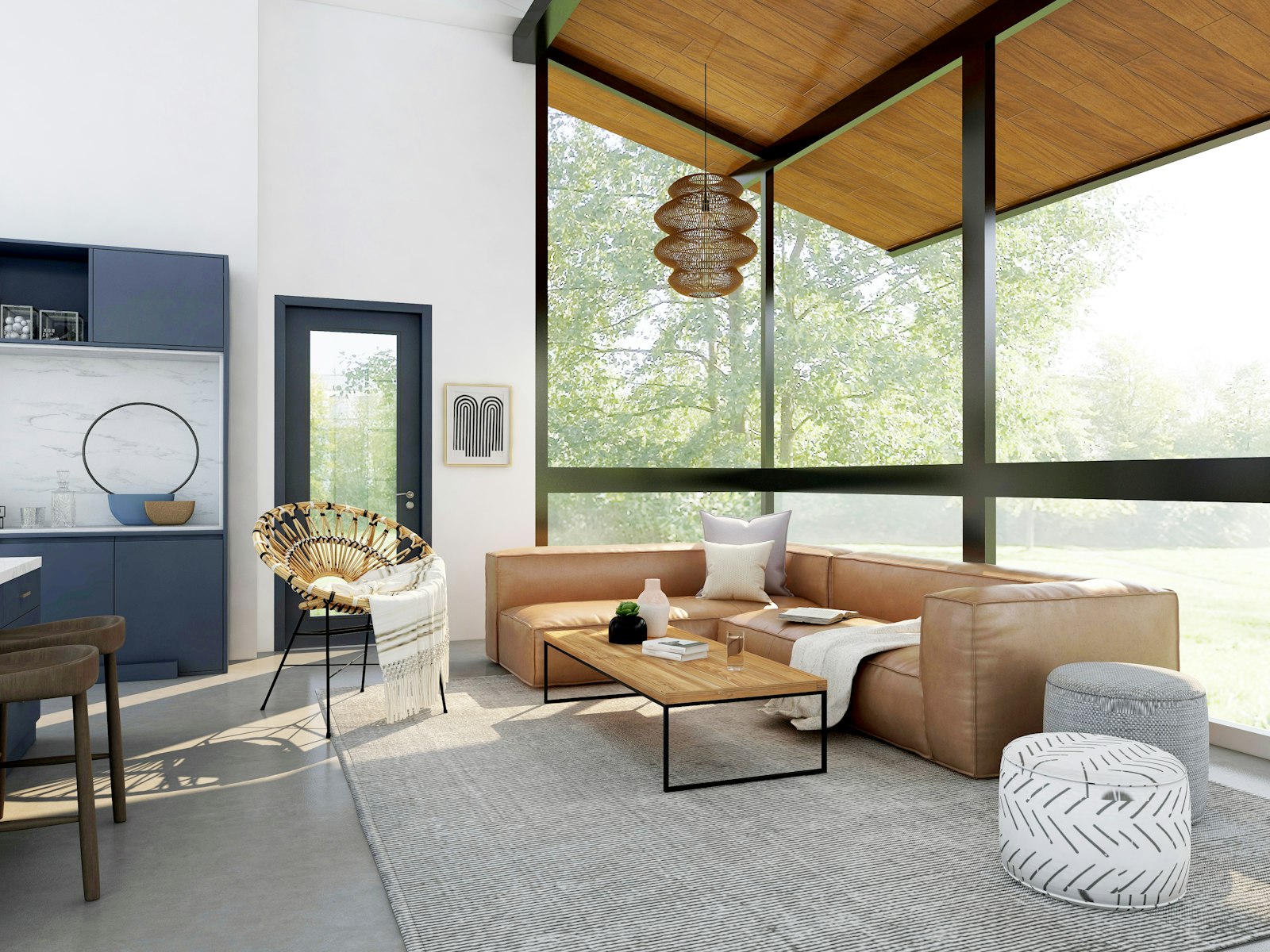
The previous renovation had broken the ground floor into too many small rooms. We removed three internal walls and re-organised the ground floor as a single connected volume — entry, kitchen, dining, living — with a long sliding glass system to the rear garden. A skylight was added above the staircase to bring natural light deep into the centre of the house.
Plan the upper floors for ten years ahead
The middle floor became the parents’ wing — a generous principal suite with private sitting area and dressing room. The upper floor was given to the daughters. Their bedrooms are mirror-planned but materially distinct, with a shared study area between them that they will still use as teenagers. A guest room and shared family bathroom complete the upper level.
Layer the materials
Where the previous interior had specified a single dominant material palette, the new design layers four. Honed travertine on principal floors. Whitewashed European oak for joinery. A deep green tile in the kitchen as a quiet point of drama. Brushed bronze hardware throughout. The layering produces a home that reveals itself in stages.
Materials
Honed travertine for principal floors. Whitewashed European oak for principal joinery. A handmade green ceramic tile from a small Singapore studio for the kitchen splashback and one bathroom. Brushed bronze hardware. Linen drapery throughout. The kitchen island is a single book-matched quartzite slab with soft warm grey movement.
The daughters’ rooms have separate finishing palettes that share a common framework. The older daughter’s room is in deeper terracotta; the younger’s is in a soft pink-blush. Both will read as teenage rooms in three years’ time without redecoration.

What we are proudest of
The kitchen. The clients had asked for a kitchen that took serious cooking seriously, and the room earns the brief. A 4m island, a wet kitchen behind, integrated appliances, lighting designed around the work surfaces rather than the ceiling. Both parents cook. Their friends now come for dinner.
Six months after handover, the wife told us the kitchen had quietly become the most-used room in the house. We could not ask for a higher compliment.
Project facts
- Location: Holland Village, Singapore
- Built area: ~3,400 sq ft over three levels
- Project type: Full interior renovation, A&A submission
- Timeline: 12 months from concept to handover
- Designed by: Designed Design Associates
Working with DDA
If you are planning a semi-detached or terrace renovation in Singapore and want a designer who treats the long-term character of the home as part of the brief, we would be glad to hear from you.